_edited.png)

Trailer & Equipment Repair: When Is It Worth Repairing and When Should You Replace It?
Updated: Sep 2
A cracked trailer frame, broken ramp or damaged piece of equipment doesn't necessarily need to be replaced. Many failures can be repaired, reinforced or rebuilt, particularly when the damage is confined to one area and the rest of the equipment is still in good condition. The more important question is whether repairing it makes sense.
At CAKI Fabrication, we see equipment and trailers with cracked structural members, broken welds, worn hinges and pivots, damaged mounts, bent components and corrosion. Deciding what to do with them involves more than determining whether the damaged area can be welded. We also need to consider why it failed, the condition of the material around it, what the equipment needs to do when it goes back into service and whether the cost of repairing it makes sense compared with replacement.
In practical terms, the repair-or-replace decision usually comes down to five things: the extent of the damage, the condition of the surrounding material, the cause of the failure, the remaining service life of the equipment and the economics of repairing it.
Start With Why It Failed

A crack tells you where something failed, but it doesn't necessarily tell you why. Before repairing it, we want to understand what caused the failure. An area may have been damaged by an impact, weakened by corrosion, subjected to repeated loading or flexing, or affected by wear somewhere else in the assembly. If the conditions that caused the failure are still present, simply welding the crack may only postpone the next problem.
One of the first distinctions we want to make is whether we're looking at an isolated failure or evidence of a broader problem. A damaged bracket caused by a single incident may be relatively straightforward to repair or replace. Cracking appearing in several related areas, repeated failure in the same location or visible movement elsewhere in the structure tells us to look more closely at what is happening before deciding how to repair it.
In some cases, a straightforward weld repair is entirely appropriate. In others, the damaged material may need to be removed and replaced, the area reinforced, or a bracket or component fabricated differently to address the cause of the failure. The point isn't to make a repair more complicated than it needs to be. It's to understand the problem well enough to choose an appropriate repair.
What Trailer and Equipment Damage Can Be Repaired?
There are many situations where repairing a trailer or piece of equipment is a practical alternative to replacement. Cracked frames and structural members, damaged ramps and gates, worn hinges and pivots, broken brackets and mounts, damaged decks, failed welds and bent fabricated components are all common examples. Localized corrosion can also sometimes be addressed by removing deteriorated material and replacing the affected section.
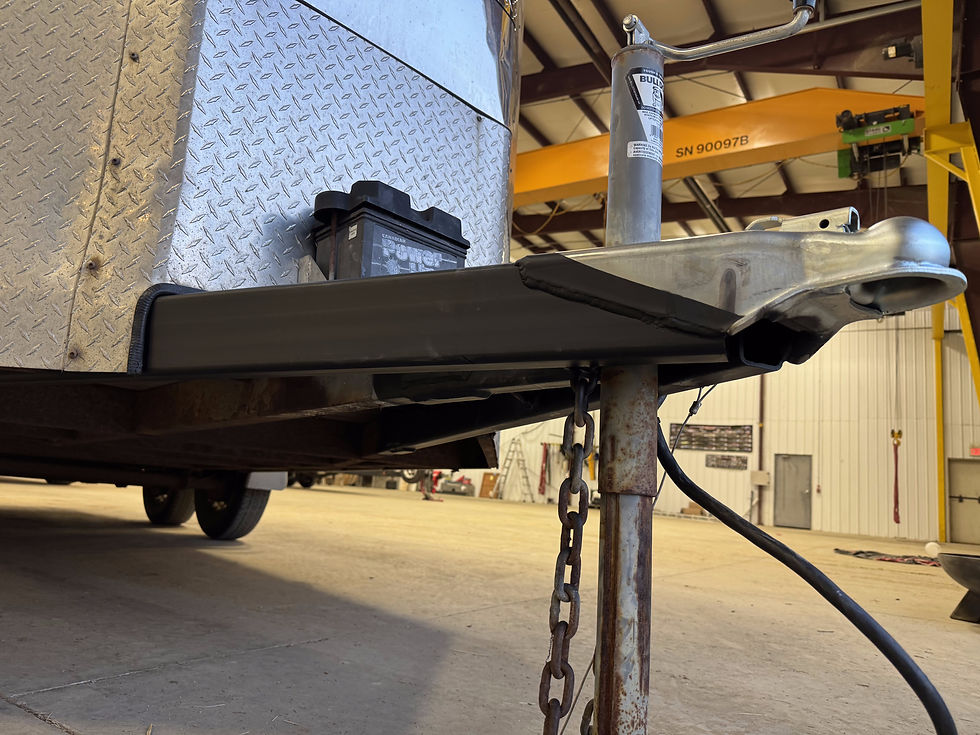
Fabrication capability becomes especially useful when the damaged component isn't readily available off the shelf. Rather than replacing an entire assembly because one bracket, mount or section has failed, it may be possible to fabricate the component that is actually needed. The same applies to older or modified equipment where replacement parts are difficult to find or no longer available.
Equipment repairs aren't limited to mild steel, either. The ability to work with aluminum and stainless steel provides additional repair and fabrication options where those materials are part of the original equipment. Whether any particular repair is appropriate still depends on the condition of the surrounding structure, the nature of the component and its intended use.
Can a Cracked Trailer Frame Be Repaired?
In many cases, a cracked trailer frame can be repaired, but the location of the crack, the reason it developed and the condition of the surrounding frame all matter. A localized crack in otherwise sound material is a very different situation from cracking in several structural areas or a frame that has lost significant material to corrosion.
It is also worth considering whether the crack resulted from an isolated incident or developed over time. Damage from an impact may call for one type of repair, while a crack caused by repeated flexing or loading may indicate that the affected area needs more than a weld. Depending on the trailer, its construction and intended use, there may also be specific requirements that need to be considered before determining the appropriate repair.
Photos are extremely helpful for an initial assessment, but they don't always tell the whole story. The extent of the damage and the condition of the surrounding material may only become clear once the area can be properly inspected. If you've found cracking, significant distortion, a failed structural component or another problem that could affect how the equipment carries a load, don't assume it's appropriate to continue using or towing it simply because the damage may be repairable. If you're concerned about moving it, contact us first. Depending on the location and situation, we may be able to come out and assess the damage before you bring the equipment to our Red Deer County shop.
When Is Repair Worthwhile?
Repair generally makes sense when the damage is reasonably contained, the main structure is still sound and there is enough good material available to complete the repair properly. The cause of the failure should also be something that can reasonably be addressed, and the rest of the equipment should have enough useful life remaining to justify the investment.
Economics are part of the decision too. If a specialized trailer or piece of equipment would be expensive or difficult to replace, repairing a damaged section can be a sensible investment. The same may be true when replacement would involve a long lead time and significant operational downtime. On the other hand, repeatedly spending money on an asset with widespread deterioration can quickly become false economy.
Repair cost shouldn't be considered in isolation. Replacement cost, remaining service life, availability of replacement equipment and the cost of downtime all contribute to the decision. A repair that looks expensive on its own may still make economic sense if it returns an otherwise sound and valuable piece of equipment to service.
When Is a Trailer Too Rusty to Repair?
Rust doesn't automatically make a trailer or piece of equipment unrepairable. The important issue is how much deterioration has occurred and, critically, how much sound material remains.
Surface corrosion on otherwise solid steel is very different from corrosion that has substantially thinned the material or created holes and significant material loss. A proper repair needs suitable material to work with. If the steel surrounding a damaged area has deteriorated badly enough, there may no longer be an appropriate place to tie the repair into.

Where corrosion is localized, it may be practical to remove the deteriorated material and fabricate a replacement section. That can preserve the rest of a trailer or piece of equipment that still has useful life remaining. The economics change when corrosion is widespread. If removing one deteriorated section simply exposes another badly deteriorated area, and then another, the customer can end up paying to rebuild a substantial portion of an asset that is already nearing the end of its useful life.
If the equipment is simply too rusted out to repair appropriately, replacement needs to be considered. Continuing to patch individual areas in that situation can add cost without providing a sensible long-term solution.

When Does Replacement Make More Sense?
There isn't a universal age or repair-cost percentage that determines when equipment should be replaced. It depends on replacement cost, remaining useful life and how extensive the problems have become.
We would be more inclined to discuss replacement when deterioration is widespread, several important areas are failing, corrosion has left too little sound material for an appropriate repair, or a large proportion of the equipment would need to be rebuilt. A history of repeated failures also matters, particularly if the customer is continually paying for repairs and losing productive time whenever the equipment is out of service.
For equipment that is part of a working operation, the true cost of repeated failure includes more than welding and materials. Lost use, transportation, scheduling disruption and repeated repairs all have a cost. At some point, putting that money toward replacement becomes the better business decision.

A fabrication shop shouldn't be trying to find a way to repair absolutely everything that comes through the door. If the condition of the equipment means we don't think repairing it is appropriate or economically sensible, we'll tell you.
Catch Problems Before They Become Bigger Repairs
Many equipment failures give some warning before they become major problems. Small cracks around welds, movement in brackets or mounts, worn pivots, distortion and corrosion are worth paying attention to even when the equipment is still functioning normally.
A small crack can continue to grow under repeated loading and vibration. Loose or worn components can change how loads move through an assembly and begin affecting other areas, while corrosion becomes more concerning when it progresses beyond surface rust and starts reducing the thickness of the material.
Regularly looking over high-stress, load-bearing and high-wear areas can catch problems while there are still more repair options available. Changes in how a ramp closes, how a trailer sits or how a component moves can all be signs that something deserves a closer look. Finding out why before the component fails completely can mean a much more manageable repair.
A Proper Repair May Involve More Than Welding
There are plenty of repairs where welding the existing component is exactly the right solution. Fabrication capability becomes valuable when the damage requires something more.
A deteriorated section can sometimes be cut out and replaced. A broken bracket or mount can be fabricated rather than trying to source an obsolete component. An area that isn't holding up well in service may require reinforcement or heavier material, where appropriate, rather than another identical repair. For equipment incorporating aluminum or stainless steel, having the capability to work with those materials can also provide additional repair options.
This gives the customer another choice between repeatedly patching the same problem and replacing the entire piece of equipment. In some cases, rebuilding the component or section that has reached the end of its useful life allows the rest of an otherwise serviceable asset to stay in operation.

How CAKI Approaches the Repair-or-Replace Decision
When damaged equipment comes to CAKI Fabrication, we start with the failure and the condition of the equipment around it. We want to understand what broke, what likely caused it and whether we're dealing with an isolated problem or something affecting the structure more broadly. From there, we look at the surrounding material and what will be required of the equipment once it returns to service.
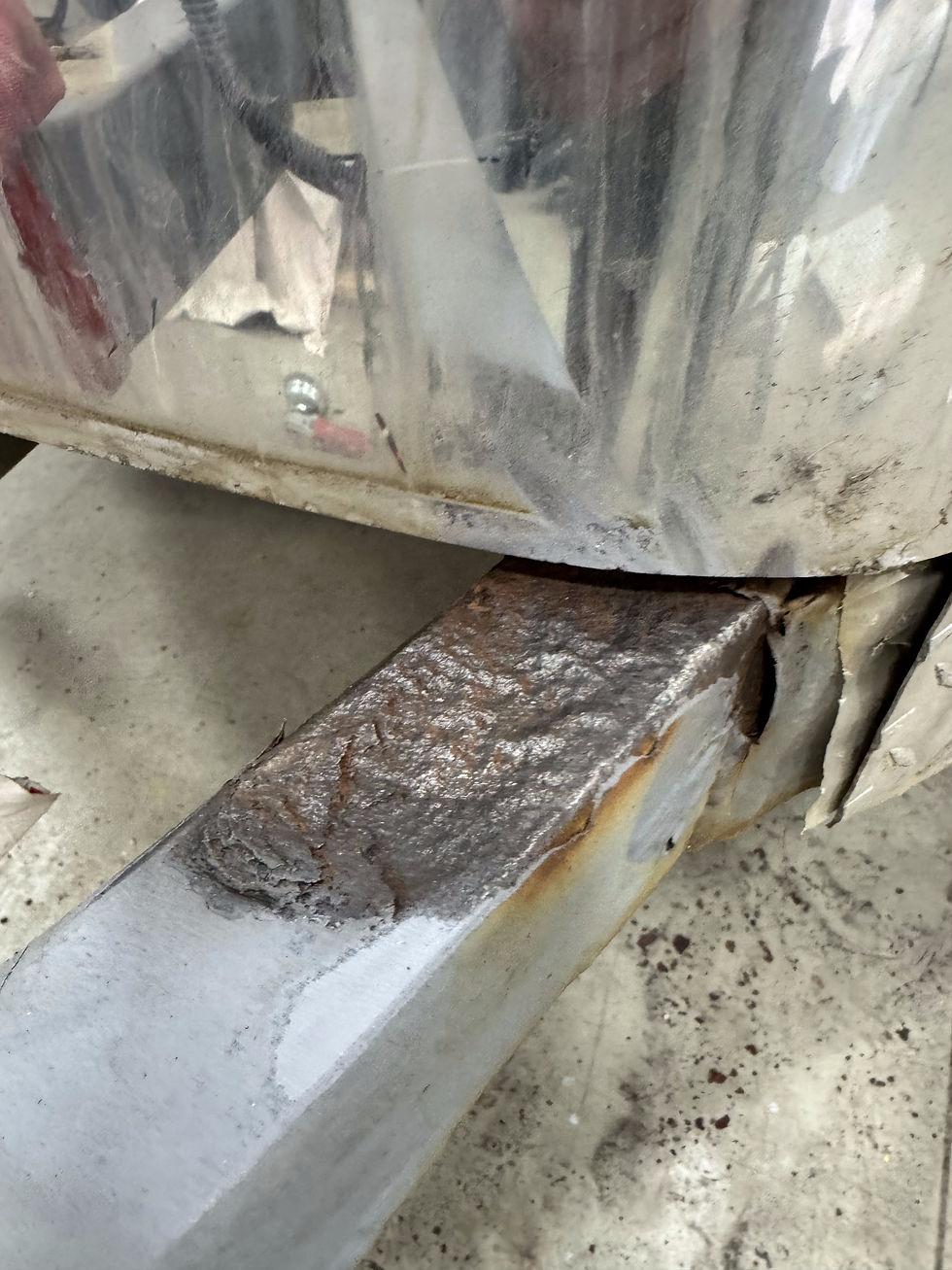
That assessment helps determine whether a straightforward repair is appropriate or whether damaged material needs to be replaced, a component fabricated or an area reinforced. A technically possible repair isn't necessarily an economical one, particularly when corrosion or deterioration extends well beyond the first visible problem.
Conversely, replacing an otherwise serviceable piece of equipment because one repairable component has failed can be an unnecessary expense.
The purpose of assessing the equipment first is to understand which situation you're dealing with and recommend a practical way forward.
Key Takeaways
A damaged trailer or piece of equipment doesn't automatically need to be replaced.
The repair-or-replace decision should consider the extent of the damage, condition of the surrounding material, cause of failure, remaining service life and overall economics.
Cracked frames, failed welds, ramps, hinges, brackets, mounts and worn sections can often be repaired when the surrounding structure remains sound.
Understanding why something failed helps determine whether a simple repair is enough or whether the underlying problem also needs to be addressed.
A proper repair may involve replacing damaged material, fabricating components or reinforcing an area rather than simply welding over a crack.
Rust doesn't automatically mean replacement. The extent of the corrosion and the amount of sound material remaining are what matter.
Widespread deterioration, repeated failures and limited remaining service life can make replacement the better economic decision.
If damage makes you concerned about moving or towing the equipment, have it assessed first rather than assuming it is appropriate to transport.
Frequently Asked Questions
Can a cracked trailer frame be welded?
In many cases, yes. The appropriate repair depends on where the frame has cracked, why the crack developed, the condition of the surrounding material and the construction and intended use of the trailer. A localized failure in otherwise sound material may be repairable, while multiple cracks, significant corrosion or evidence of a broader problem may require a different approach.
How do I know if my trailer is too rusty to repair?
The presence of rust alone isn't enough to make that decision. What matters is the amount and condition of the material remaining underneath it. Localized corrosion may be dealt with by removing and replacing the affected section, while widespread corrosion or substantial material loss can leave too little sound steel to complete an appropriate repair.
Why does a repaired weld sometimes crack again?
A crack can return when the condition that caused the original failure is still present. Repeated flexing, loading, worn components, corrosion or movement elsewhere in the assembly can all contribute. When a repair has failed more than once, it is worth investigating the reason for the recurring failure rather than simply welding the same area again.
Is reinforcing a damaged area better than simply welding it?
Not necessarily. Reinforcement can be appropriate when the application and cause of the failure warrant it, but adding more material isn't automatically a better repair. Some failures only require proper preparation and welding, while others may need damaged material replaced, reinforcement added or a component modified. The repair should suit the structure and the way it is used.
When is replacing equipment better than repairing it?
Replacement becomes worth considering when deterioration is widespread, several important areas are failing, there isn't enough sound material for an appropriate repair, or the cost and downtime associated with continued repairs no longer make economic sense. The condition and remaining useful life of the rest of the equipment should be considered alongside the immediate repair cost.
What should I send CAKI to have a trailer or equipment repair assessed?
Start with several clear photos. Include photos of the complete trailer or piece of equipment, close-ups of the damage and wider views showing how the damaged component connects to the surrounding structure. Let us know what the equipment is used for, what happened or how the problem developed, and whether the same area has been repaired previously.
If you're concerned that the damage could make the trailer or equipment inappropriate to move, tell us that as well. We're happy to discuss the situation and, where appropriate, may be able to assess it before you tow or transport it to our shop.
For agricultural equipment, the timing of a failure can introduce additional considerations. Our guide to farm equipment repairs during harvest looks specifically at repair, reinforcement, fabrication, replacement and field-welding considerations during the harvest season.
Not Sure Whether It's Worth Repairing, or Whether You Should Move It?
You don't need to diagnose the problem yourself. Send us a few clear photos showing the overall trailer or equipment, the damaged area and how that area connects to the surrounding structure. Tell us briefly what happened, what the equipment is used for and whether the problem has been repaired before.
CAKI Fabrication provides Equipment & Trailer Repairs from our Red Deer County fabrication shop for customers throughout Central Alberta. We can repair damaged components, fabricate replacement sections, reinforce or modify problem areas, and work with steel, aluminum and stainless steel. Mobile welding is also available where the job and location are suitable.
If you're concerned about transporting damaged equipment, let us know before you move it. We can discuss what you're seeing and, where appropriate, may be able to come out and assess it first.
Email us at hello@cakifab.com or text us at 403.877.5032 with your photos and project details, and we'll help determine the practical next step.
Related Services
Equipment & Trailer Repairs
From cracked frames and failed welds to reinforcement, modifications and custom replacement components, we provide practical repair solutions for trailers and equipment throughout Central Alberta.
Mobile Welding Services
Concerned about moving damaged equipment, or need a repair assessed on-site? Learn more about CAKI Fabrication's mobile welding and on-site repair services across Central Alberta.
Custom Fabrication Services
When a repair requires more than welding, our fabrication capabilities include custom replacement components, brackets, mounts, modifications and one-off solutions.
Further Reading
Continue exploring fabrication, material selection, and custom project resources:


Comments