_edited.png)

Farm Equipment Repairs During Harvest: Repair, Reinforce or Fabricate?
Harvest is hard on equipment, and there isn't much room for downtime when something fails. A cracked hopper, damaged mount, broken weld or worn component can bring work to a stop at exactly the wrong time.
The immediate reaction is often to get the damaged area welded and get back to work. Sometimes that's exactly what's required. Other times, the visible crack or broken weld is only part of the problem. The surrounding material may also be damaged, something may have moved out of alignment, corrosion may have weakened the component, or the original failure may require more than a straightforward weld repair.
That's why we start by looking at the failure and the condition of the equipment around it. Depending on what we find, the appropriate solution might be to repair the damaged area, replace deteriorated material, strengthen the component or fabricate a replacement part. There are also times when the damage is simply too extensive, or the economics no longer make sense, and replacement is the better option.
Whether damaged farm equipment should be repaired or replaced usually comes down to the extent of the damage, the condition of the surrounding material and the economics of the repair. If the remaining material is sound, repair or fabrication may be practical. If corrosion or damage has substantially compromised the component, replacement may make more sense.
At CAKI Fabrication, our agricultural equipment repair work focuses on the welded and fabricated components of farm equipment. That includes work involving hoppers, brackets, mounts, frames, trailers and other steel, aluminum or stainless components that have cracked, worn, corroded or been damaged in service.
A Crack Doesn't Always Tell the Whole Story
A crack or broken weld tells you where something has failed, but it doesn't necessarily tell you why.
Before deciding how to repair it, we look at the damaged area as well as the material around it. We want to know whether the base material is still sound, whether something has bent or moved out of alignment, how extensive any corrosion or wear has become, and whether there are signs that something has been rubbing, moving or operating incorrectly.
That matters because a localized crack in otherwise sound material is a very different job from a crack surrounded by badly corroded or deteriorated steel. Simply welding over the obvious failure isn't much use if the material beside it is no longer capable of supporting the repair.
How the component operates matters too. The goal isn't just to make the damaged area look repaired in the shop. It has to go back into service and do its job.
Repair, Reinforce or Fabricate?
Once we've assessed the damage, we can determine what the repair actually requires.
For some jobs, proper preparation followed by a weld repair is appropriate. If the surrounding material has deteriorated, however, damaged sections may need to be cut out and replaced. Other failures may call for strengthening, while a badly damaged bracket, mount or similar fabricated component may be better replaced with a newly fabricated one.
Strengthening doesn't simply mean adding as much steel as possible. Any reinforcement needs to make sense for the component, the failure and how the equipment operates.
This is also why it's difficult to diagnose many equipment failures properly from one close-up photo. Seeing the damaged area helps, but understanding the larger assembly and how the failed component fits into it can change the repair approach considerably.

When a Replacement Part Isn't Readily Available
Parts availability can be particularly frustrating during harvest. Waiting days or weeks for a replacement part isn't much help when the equipment is down and there's crop to get off.
For some fabricated components, there may be another option. Depending on the part and its application, brackets, mounts, hopper sections and other fabricated pieces can sometimes be repaired or fabricated rather than waiting for a suitable OEM replacement.
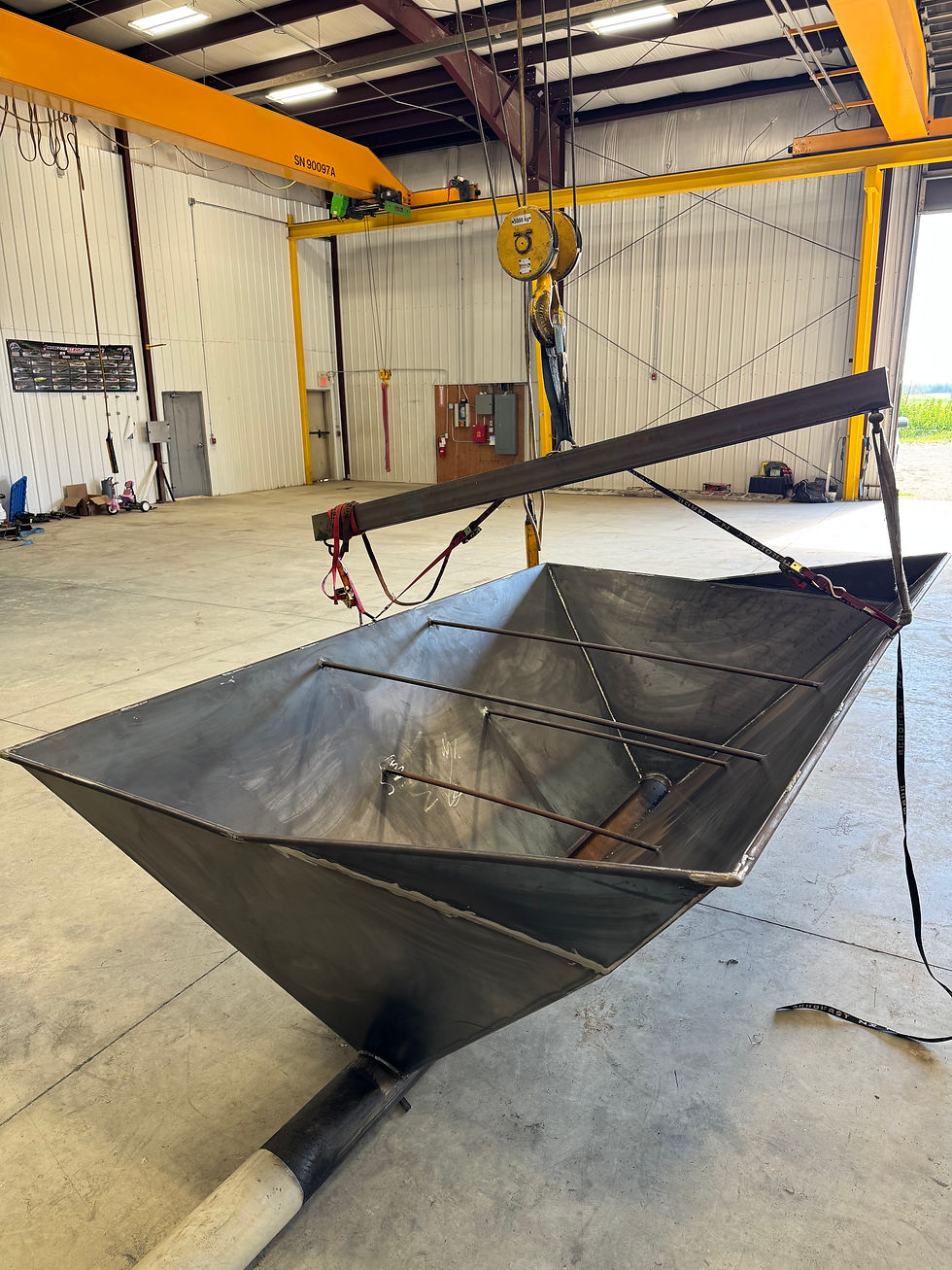
Hoppers are one example of the type of agricultural fabrication and repair work we undertake. Wear or damage may be concentrated in one section while much of the remaining assembly is still serviceable. In the right circumstances, repairing or replacing the affected area can make considerably more sense than replacing the entire unit.
That doesn't mean every OEM part should or can be reproduced. Safety-critical, engineered and specialized components need to be considered differently. We assess what the part does and the requirements of the application before determining whether fabrication is an appropriate option.

When Is Farm Equipment Too Damaged to Repair?
There are times when we will recommend replacement rather than repair.
If damage has substantially compromised the integrity of a component, corrosion has left too little sound material to work with, or deterioration is widespread throughout the assembly, continuing to repair individual areas may not make sense. The economics matter as well. If repairing a badly deteriorated component is going to cost more than replacing it, that's part of the decision.
This becomes especially important during harvest because the real cost of an unreliable repair isn't limited to the repair bill. If the equipment fails again two days later, you've lost more operating time as well.
We would rather have that conversation before doing the work than repair something simply because it is technically possible to put a weld on it.
Watch for Changes Before Something Breaks
There can be warning signs before a component fails completely, particularly when the operator knows how the machine normally sounds, feels and operates.
Misalignment, unexpected rubbing, unusual noises or the smell of components rubbing can all be signs that something has changed. Visible cracking, distortion, corrosion or other damage should also be investigated, particularly if the equipment isn't operating the way it normally does.
We understand the temptation during harvest to keep running and deal with something later. The problem is that continuing to operate equipment after something has started to fail can turn a relatively manageable repair into considerably more damage. If something doesn't look, sound or operate properly, getting it checked sooner can save considerably more time and expense later.
Can Farm Equipment Be Welded in the Field?
Potentially, but this is one area where harvest conditions can significantly affect the answer.
Welding creates an ignition hazard, and dry grass, crop residue and other combustible material around agricultural equipment can make field welding unsafe. Depending on the job and conditions, moving the machinery to gravel or another suitable non-combustible work area may make an on-site repair possible, but the location and surrounding conditions still need to be assessed before welding begins.
Some non-welding work may be possible on-site, while other repairs are better completed in the shop where we have better access to fabrication equipment, materials and a controlled work area.
If a piece of equipment is difficult to transport, contact us before arranging to haul it in. Photos and a conversation about the damage and location can help us determine whether an on-site assessment is practical, whether the equipment needs to be moved to a more suitable work area, or whether bringing the component or equipment into the shop is the better approach.
Good Repairs Start With Good Preparation
Once we've determined that something is repairable, preparation becomes a critical part of the job. Damaged or deteriorated material needs to be identified and the repair area properly prepared before welding begins. Sometimes the full extent of the damage only becomes clear once that preparation is underway.
From there, the repair is based on what the component actually needs. That might be a straightforward weld, replacement of a damaged section, fabrication of a new component or additional strengthening where appropriate.
That's really what separates a proper equipment repair from simply welding the visible crack. Assessment tells us what we're dealing with, preparation gives us a sound basis for the repair, and strengthening is used where the job actually requires it.
During Harvest, Turnaround Matters
We understand that agricultural equipment doesn't have the luxury of sitting idle during harvest. When a repair comes in at this time of year, prompt assessment and turnaround matter, and we do what we reasonably can to get equipment functional again.
We won't promise a turnaround time before we know what we're dealing with, though. Damage can be more extensive than it initially appears, and rushing through a repair doesn't help anyone if the equipment ends up back out of service.
If you're contacting us about a breakdown, photos are a good place to start. Send a few wider shots showing the equipment and where the damaged component is located, along with close-ups of the actual damage. Let us know what happened, whether you've noticed any rubbing, alignment or operating changes, and whether the area has been repaired before. That gives us much more to work with than a single close-up of a crack and can help us determine the best next step more quickly.
Call or Text Us at: 403.877.5032
Email us at: hello@cakifab.com
Key Takeaways
A crack or broken weld doesn't always show the full extent or cause of an equipment failure.
The condition of the surrounding material, corrosion, alignment, wear and how the component operates all affect the repair decision.
Depending on the damage, an appropriate repair may involve welding, replacing deteriorated material, strengthening an area or fabricating a replacement component.
Some fabricated components can be repaired or reproduced when a suitable OEM replacement isn't readily available, depending on the part and application.
Extensive damage, corrosion or poor repair economics can make replacement the better choice.
Changes in alignment, rubbing, unusual sounds or smells and visible damage can provide warning before a larger failure occurs.
Welding in agricultural environments requires careful consideration of dry grass, crop residue and other combustible material.
Getting advice when a problem first appears can help prevent additional damage, downtime and expense.
Frequently Asked Questions
Can cracked farm equipment be welded?
Often, but it depends on what has failed and the condition of the surrounding material. A localized crack in otherwise sound material is different from a failure involving extensive corrosion, distortion or deterioration. We assess the damaged area before determining whether welding alone is appropriate or whether additional repair work is required.
Can you fabricate a farm equipment part if the OEM part isn't available?
In some cases, yes. Brackets, mounts, hopper sections and other fabricated components may be repairable or replaceable through fabrication when a suitable OEM part isn't readily available. The function and requirements of the component need to be considered first, particularly for safety-critical, engineered or specialized parts.
When is farm equipment too damaged or corroded to repair?
Replacement may be the better option when damage has substantially compromised the component, corrosion has left too little sound material for an appropriate repair, deterioration is widespread or the repair no longer makes economic sense compared with replacement.
Can CAKI repair agricultural equipment in the field?
Some work can be assessed or completed on-site, but welding around dry grass, crop residue and other combustible material presents a fire hazard. The equipment may need to be moved to a suitable non-combustible work area, and some repairs are better completed in the shop. Contact us with photos and information about the location and we can help determine the practical next step.
What should I do if I notice a crack or damaged component during harvest?
If possible, avoid continuing to operate the equipment until you have a better idea of what has failed and whether continued use could cause additional damage. Take wider photos showing the component and surrounding equipment as well as close-ups of the damaged area, and note any unusual sounds, rubbing, alignment changes or operating problems.
Is it better to repair or replace damaged farm equipment?
It depends on the extent of the damage, the condition of the remaining material, what the repair requires and the cost relative to replacement. A localized failure in otherwise serviceable equipment may be well worth repairing, while widespread deterioration or extensive corrosion can make replacement the better investment.
Need an Agricultural Equipment Repair During Harvest?
If you've found a crack, damaged hopper, broken bracket, failed weld or another problem with a fabricated component, send us some photos and tell us what you're seeing. Wider photos showing the equipment and component, along with close-ups of the damage, will help us make a useful initial assessment.
If you're not sure whether something is worth repairing, that's fine too. Send us some photos and tell us what happened. We can take a look at what you're dealing with and discuss whether repair, fabrication or replacement makes the most sense before you decide what to do next.
CAKI Fabrication provides agricultural equipment welding, repair and custom fabrication from our Red Deer County shop for farms throughout Central Alberta. Where appropriate, mobile assessment or repair may also be possible depending on the job, location and working conditions.
During harvest, we know getting equipment functional again matters. We'll help you work out the most practical way forward without assuming that welding the damaged area is automatically the right answer.
Call or Text Us at: 403.877.5032
Email us at: hello@cakifab.com
Further Reading
Can Welding Repairs Be Completed On-Site?Very relevant because MKT-009 specifically raises field/mobile repair.
See a Real Project: Custom Fertilizer Hopper Fabrication for a Central Alberta Agricultural Spreader


Comments