_edited.png)

Custom Fertilizer Hopper Fabrication for a Central Alberta Agricultural Spreader
Updated: Sep 2
From a Cardboard Beer Box Model to a Fully Fabricated Hopper
When a Central Alberta agricultural customer experienced failure of an existing fertilizer hopper due to long-term corrosion, they approached CAKI Fabrication looking for a practical replacement solution.
The original hopper had deteriorated over time after years of exposure to fertilizer and mineral products. Rather than replacing the entire spreader, the customer wanted a custom-fabricated hopper that would fit the existing equipment, maximize capacity, improve durability, and remain within budget.
What made this project particularly unique was the starting point: the customer supplied hand-drawn sketches and a scale model built from a recycled beer box to demonstrate their vision for the replacement hopper.

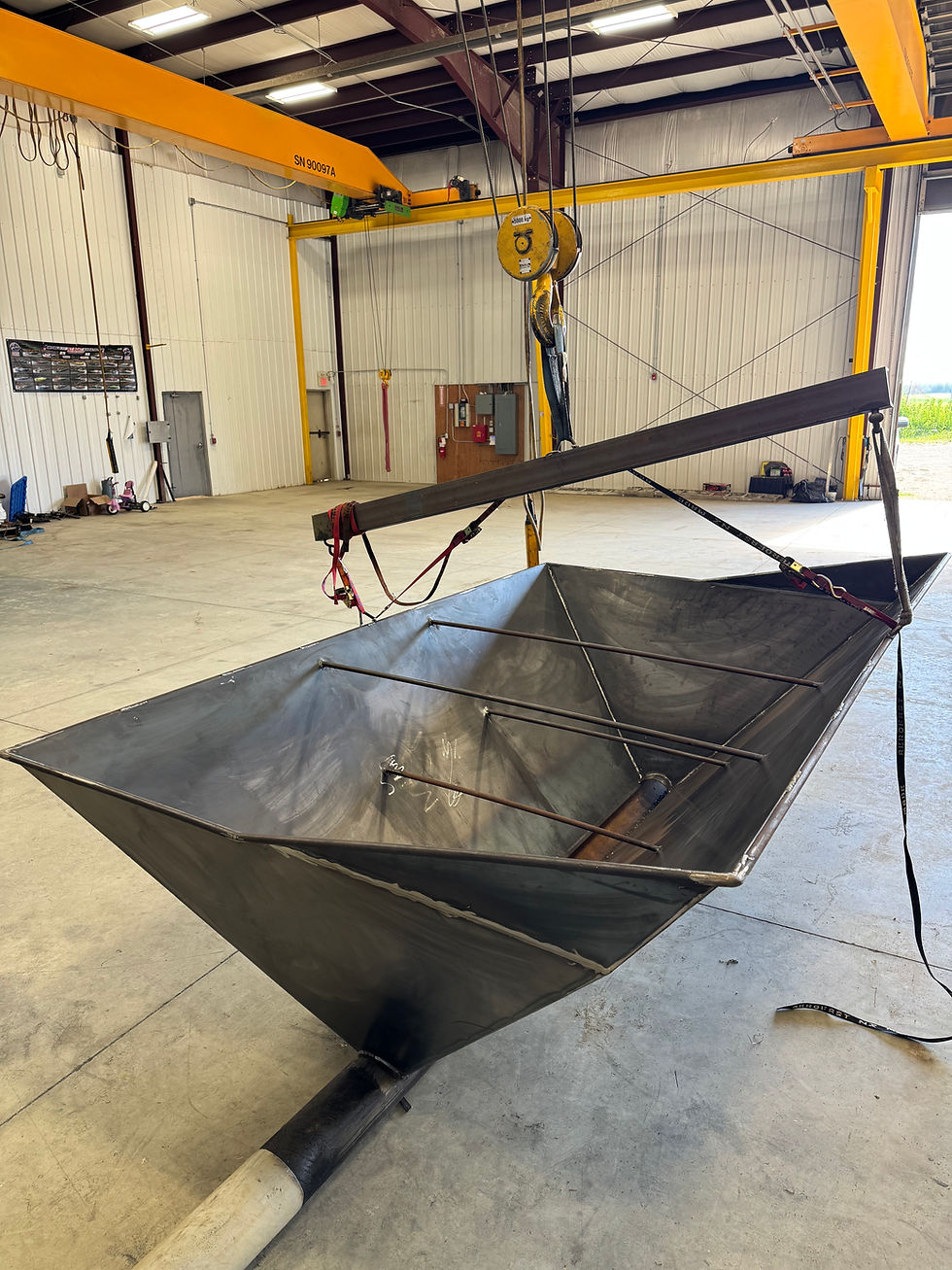
CAKI Fabrication transformed that concept into a full-scale mild steel hopper designed specifically for the customer's fertilizer spreader.

Understanding the Real Challenge
The challenge wasn't simply building a new hopper.
The replacement needed to:
Fit the customer's existing spreader framework
Integrate properly with the existing auger assembly
Maximize hopper capacity
Improve structural durability
Maintain efficient material flow
Minimize material waste
Remain within the customer's budget
Agricultural equipment replacement can often be costly, particularly when dealing with older or specialized machinery. In many situations, custom fabrication provides a practical solution that extends equipment life while improving functionality.
For this project, success depended on accurately interpreting the customer's concept and turning it into a finished product that would perform reliably in day-to-day agricultural use.
Custom Fertilizer Hopper Fabrication and Design Adjustments
One of the most interesting aspects of this project was converting a simple scale model into a fully fabricated component.

The customer supplied hand sketches and a cardboard mock-up built from a recycled beer box. While most fabrication projects begin with detailed drawings, this project started with a hand-built model that represented the customer's vision for the finished hopper.
Using the supplied model as a reference, CAKI Fabrication scaled the dimensions to full size and developed a fabrication plan that preserved the customer's vision while incorporating practical improvements based on fabrication experience.
As fabrication progressed, some dimensions from the original scale model required adjustment to ensure proper fitment, structural integrity, and compatibility with the existing spreader and auger system. This is a common part of custom fabrication projects, where practical fabrication considerations and real-world equipment requirements must be balanced with the original concept.
Additional reinforcement was incorporated into the design to improve long-term durability without compromising capacity or exceeding the project budget.
Projects like this highlight the value of combining customer ideas with practical fabrication knowledge to create equipment that is purpose-built for the job.
"One of the more enjoyable parts of this project was taking a customer's beer-box model and turning it into a fully functioning piece of equipment. The concept was already there—we just had to figure out how to make it work in the real world while keeping it strong, practical, and within budget."— Regan, CAKI Fabrication
Developing the Fabrication Plan
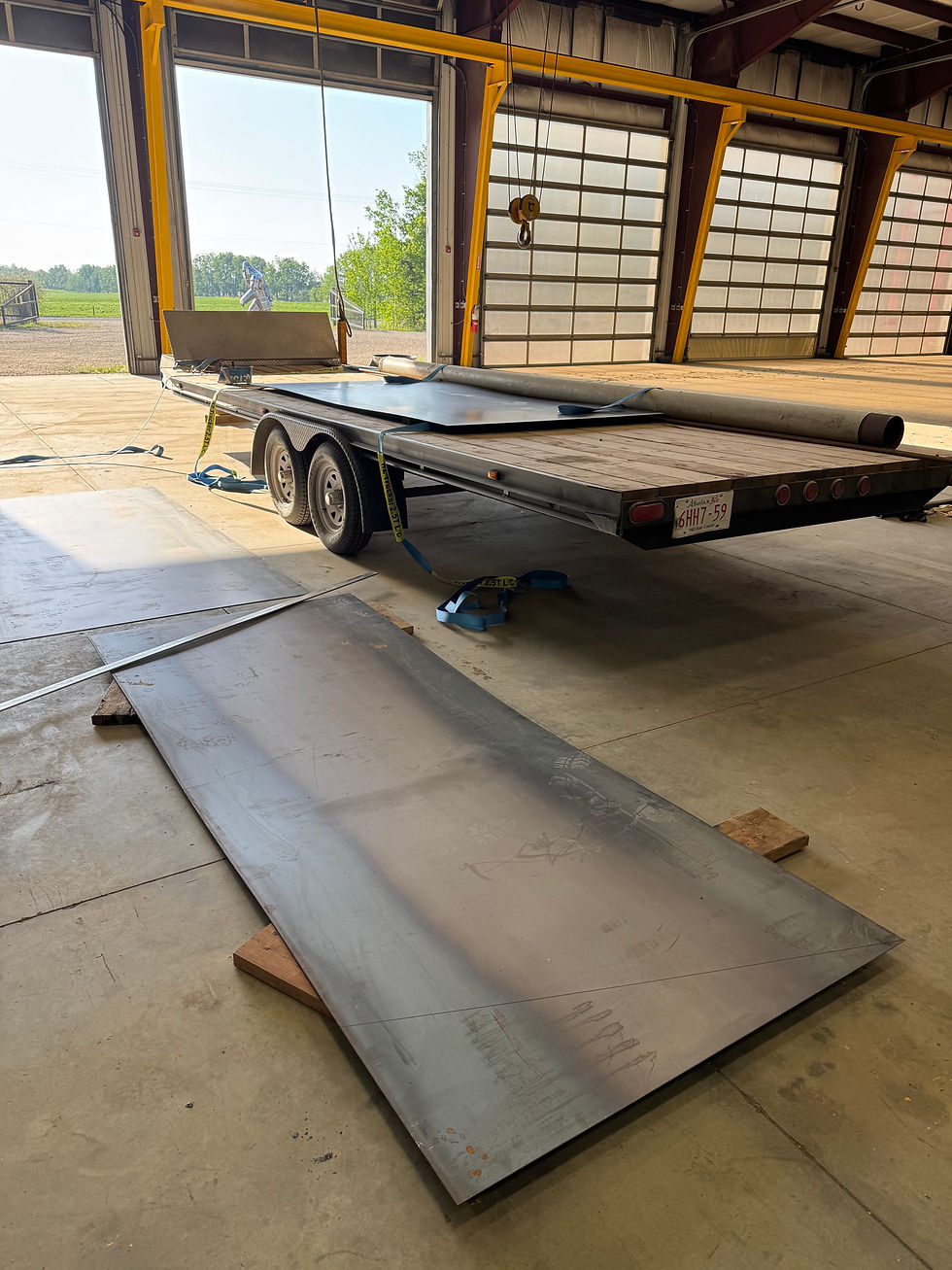
Before fabrication could begin, materials supplied by the customer were collected and prepared.
The scale model dimensions were carefully converted into full-size measurements, allowing the hopper geometry to be accurately laid out and templated.

Because the finished hopper needed to integrate with existing equipment, considerable attention was given to:
Dimensional accuracy
Auger tube fitment
Mounting locations
Material flow characteristics
Structural loading points
One of the most critical aspects of the project was ensuring the finished hopper aligned correctly with the existing auger assembly and framework. Even small dimensional errors during fabrication could create installation issues, so careful templating and fit-up checks were performed throughout the build.
Custom templating was used throughout the process to ensure proper fit-up and alignment during assembly.

Building the Hopper
Once layout and templating were completed, fabrication began.
The project involved:
Material marking and layout
Cutting and gas cutting operations
Material forming
Assembly and fit-up
MIG welding
TIG welding
Weld finishing
Throughout fabrication, careful attention was paid to maintaining dimensional consistency while maximizing capacity from the materials available.
Because fertilizer spreaders are subjected to vibration, loading impacts, and continuous material movement, structural integrity was a key consideration throughout the build.

Reinforcement and Durability Improvements
The original hopper had failed due to corrosion and years of exposure to fertilizer and mineral products.
When designing the replacement, durability became an important consideration.
Additional structural reinforcement was incorporated around loading areas and high-stress points to improve long-term performance while remaining within the customer's budget requirements.
Thicker mild steel materials were utilized to provide improved durability compared to the original hopper while maintaining the customer's design objectives.
The result was a hopper that not only matched the customer's concept but also incorporated fabrication improvements intended to support a longer service life.
Why Fertilizer Hoppers Often Fail
Fertilizer and mineral products can be particularly demanding on agricultural equipment.
Over time, moisture retention, abrasion, and chemical exposure can accelerate corrosion, especially in areas where material accumulates or protective coatings become damaged.
When fabricating replacement components for agricultural equipment, factors such as:
Material thickness
Structural reinforcement
Weld quality
Material flow design
Fabrication accuracy
all contribute to long-term durability and performance.
This project demonstrates how thoughtful fabrication can help extend the life of existing equipment while addressing the causes of previous failures.
The Finished Result
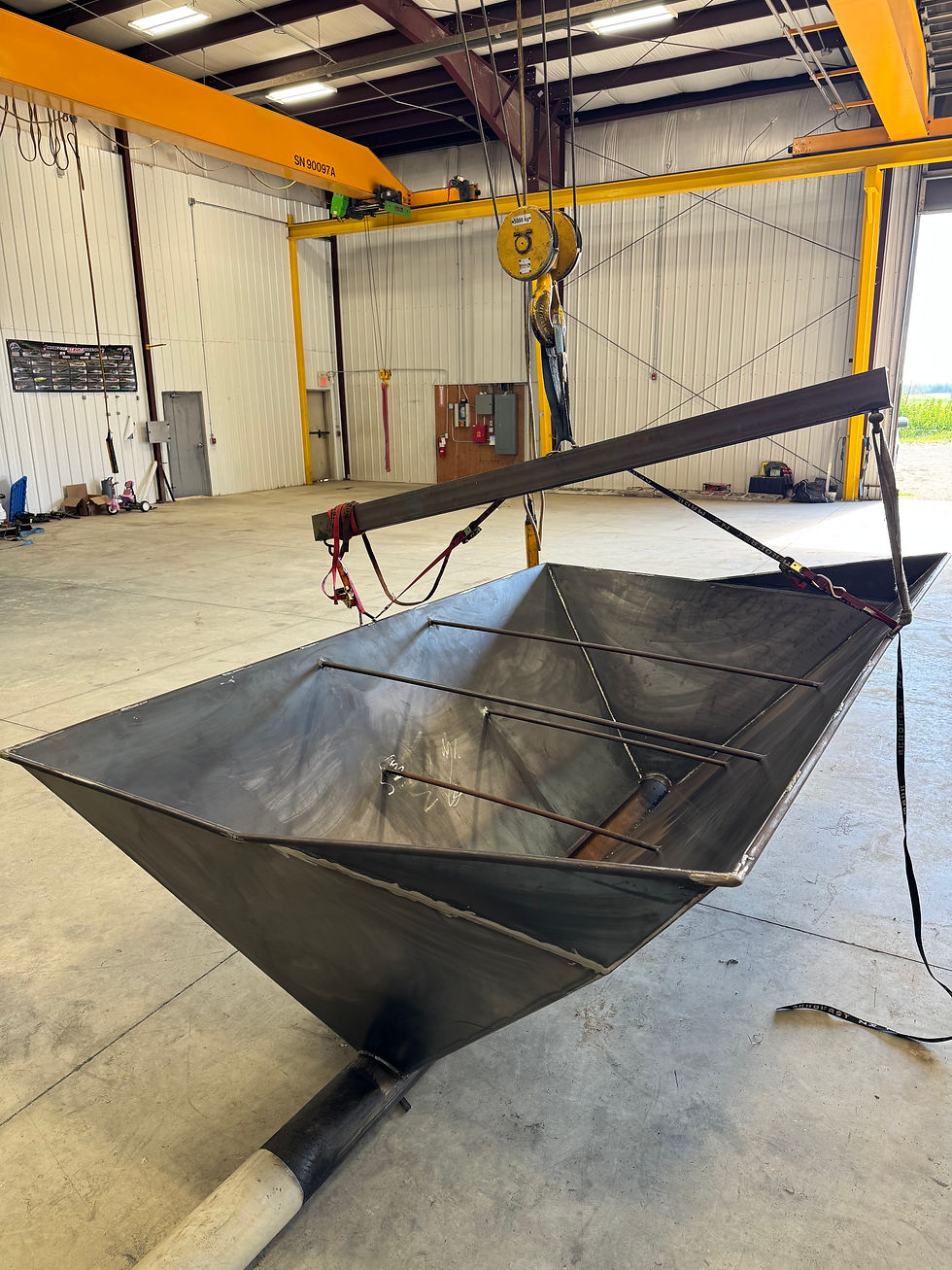
The completed hopper successfully achieved the customer's goals.
The finished fabrication:
✓ Fit the existing spreader framework
✓ Integrated accurately with the auger assembly
✓ Maximized hopper capacity
✓ Improved structural integrity
✓ Minimized material waste
✓ Remained within budget
✓ Was completed in just over one day from raw materials to finished fabrication
Seeing the finished hopper installed and ready for service was a satisfying outcome, particularly considering the project began as a hand-drawn concept and a cardboard scale model.
The project demonstrates the combination of problem-solving, fabrication expertise, and practical craftsmanship that goes into custom agricultural fabrication work.

Why Custom Fabrication Was the Right Solution
In many cases, replacing an entire piece of agricultural equipment isn't necessary.
When the primary issue is a failed component, custom fabrication can often provide a cost-effective solution that extends equipment life and improves performance.
For this customer, replacing the hopper allowed them to retain the existing spreader while addressing the corrosion issues that caused the original failure. The result was a practical solution tailored to their equipment, requirements, and budget rather than a one-size-fits-all replacement.
Project Location
Red Deer County, Alberta
CAKI Fabrication provides agricultural equipment repairs, custom fabrication, mobile welding, equipment repairs, structural steel fabrication, and manufacturing services throughout:
Red Deer County
Red Deer
Lacombe
Blackfalds
Sylvan Lake
Penhold
Central Alberta
Dealing with damaged equipment during harvest? Our farm equipment repair guide covers what to consider when deciding whether a component should be repaired, reinforced, fabricated or replaced.
Need Agricultural Equipment Repairs or Custom Fabrication?
Whether you have engineered drawings, hand sketches, a worn-out component, or even a cardboard scale model, CAKI Fabrication can help turn your ideas into durable, practical fabrication solutions.
Our Services Include:
Agricultural equipment repairs
Fertilizer hopper fabrication
Custom fabrication
Equipment modifications
If you're looking for custom fabrication, welding repairs, agricultural equipment repairs, or mobile welding services in Central Alberta, contact CAKI Fabrication to discuss your project.
Article Published By
CAKI Fabrication Ltd.
Providing custom fabrication, mobile welding, equipment repairs, agricultural fabrication, aluminum welding, and structural steel services throughout Red Deer County and Central Alberta.


Comments